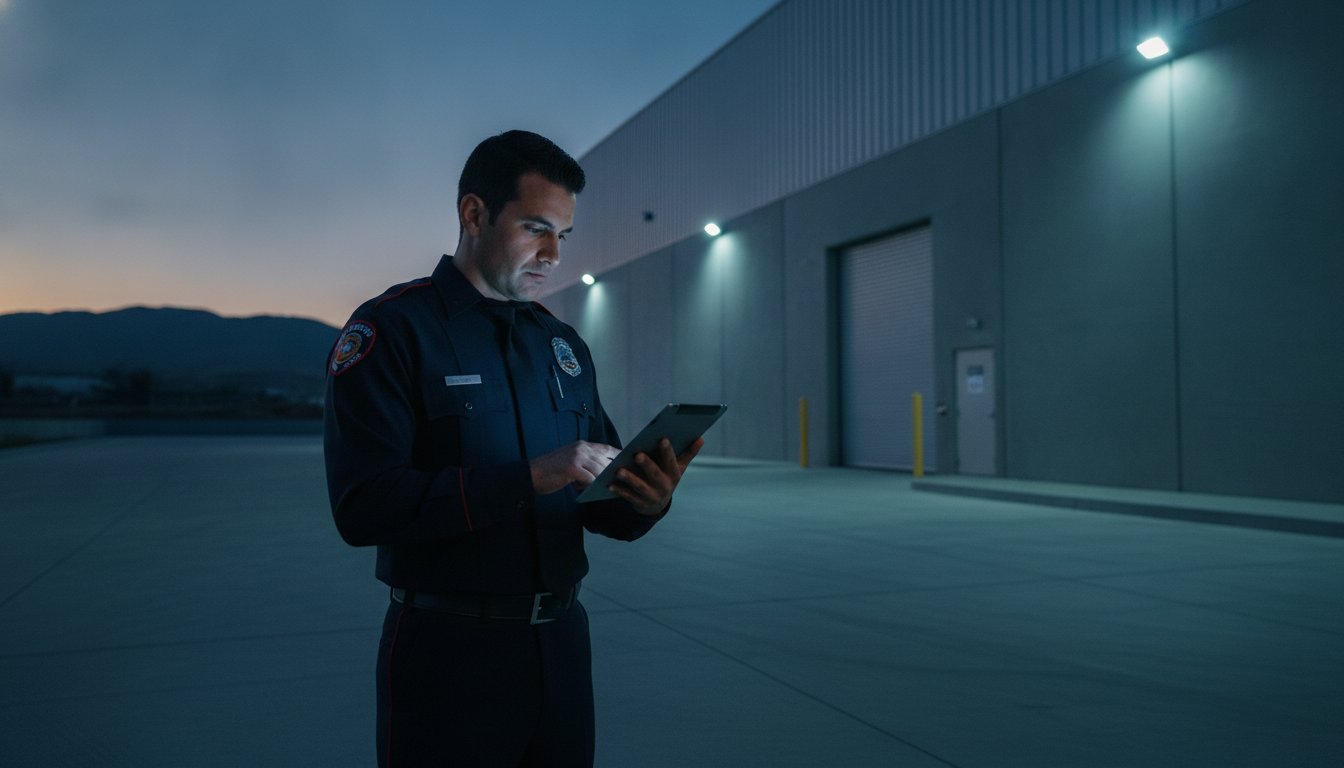
If your current security strategy still relies on a “gate and key” mentality, is your facility actually protected or just lucky? In 2026, the line between operational success and a liability nightmare is thinner than ever. You know that managing a manufacturing plant or warehouse involves more than just locking doors. It requires a disciplined approach to complex logistics and constant vigilance against theft. Mastering the full scope of industrial facility security guard duties is the first step toward transforming your site from a target into a fortress.
We agree that the pressure to maintain safety while meeting strict OSHA deadlines, like the January 2026 HazCom updates, can feel like a moving target. This article promises to help you master the essential protocols and specialized responsibilities that professional guards must perform to secure modern industrial environments. We’ll preview a clear checklist of guard responsibilities, covering everything from shipping gate management to integrated digital surveillance. This guide provides the tactical roadmap you need to reduce loss and ensure total regulatory compliance without the distraction of security concerns.
Key Takeaways
- Understand why modern industrial environments require tech-integrated security to protect high-value machinery and remote assets.
- Learn how to implement rigorous gate management and vehicle inspection protocols as part of essential industrial facility security guard duties.
- Discover how professional guards mitigate “shrinkage” by matching cargo manifests and identifying OSHA safety violations in real-time.
- Master rapid deployment and de-escalation techniques designed to manage unauthorized intruders or internal conflicts with calm authority.
- Identify the critical benefits of tailored security strategies that align with 2026 regulatory standards and insurance requirements.
The Critical Role of Security in Modern Industrial Environments
Industrial facilities represent the backbone of the economy, but they also serve as high-stakes targets for sophisticated threats. Unlike retail or office spaces, these sites house specialized, high-value machinery and hazardous materials that require more than just a locked door. A lapse in vigilance leads to more than just missing inventory. It triggers operational downtime, massive liability claims, and potential environmental disasters. Understanding modern industrial facility security guard duties starts with recognizing that your security team is the primary shield protecting your bottom line.
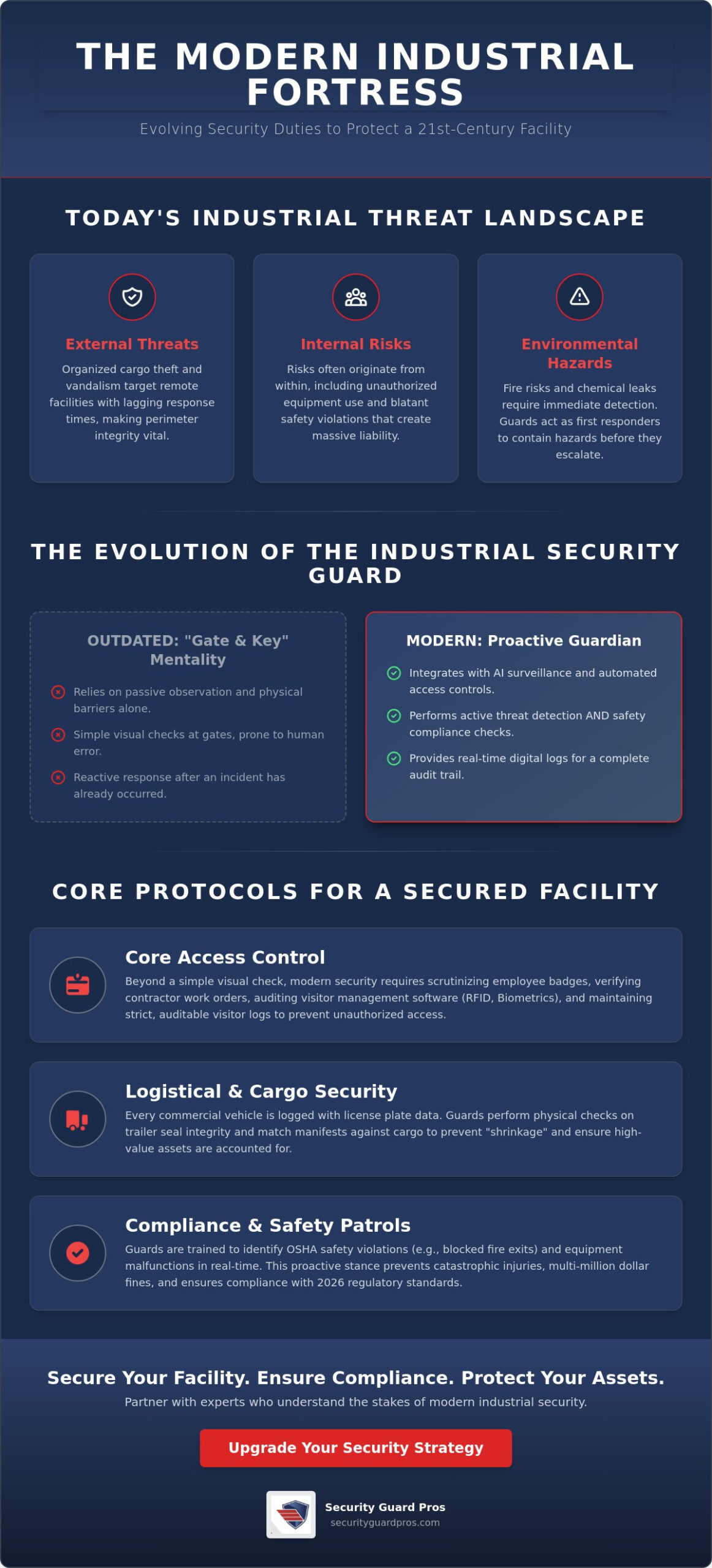
By 2026, the standard has shifted from passive observation to active security management principles. Guards no longer just watch gates; they integrate with advanced AI surveillance and automated access controls. This hybrid role demands a professional who understands both threat detection and safety compliance. When a guard identifies a blocked fire exit or a malfunctioning pressure gauge, they aren’t just doing security work. They are preventing a million-dollar OSHA fine or a catastrophic workplace injury. This proactive stance is what separates a professional guardian from a mere warm body in a uniform.
Identifying Industrial-Specific Threats
- External threats: Vandalism and organized cargo theft are rising. Criminals target remote locations where response times might lag, making perimeter integrity vital.
- Internal risks: Risks often come from within. Unauthorized equipment use or blatant safety violations create massive liability for the business owner.
- Environmental hazards: Fire risks and chemical leaks require immediate detection. A professional guard acts as a first responder who can contain a hazard before it escalates.
Regulatory Compliance in Southern California
Operating in California requires strict adherence to the Bureau of Security and Investigative Services (BSIS). Every guard must possess a valid Guard Card, but industrial environments demand specialized training beyond the basics. Compliance isn’t just about following the law. It’s about meeting the stringent requirements of insurance carriers. Professional industrial facility security guard duties include maintaining the precise logs and incident reports that protect your facility during an audit or a claim. This disciplined approach ensures that your site remains a low-risk profile in the eyes of regulators and insurers alike.
Core Access Control and Perimeter Protection Protocols
Secure perimeters begin at the primary point of entry. In a modern industrial setting, the gate is more than just a physical barrier. It’s a critical data collection hub. One of the most vital industrial facility security guard duties involves rigorous credential verification that goes beyond a simple visual check. Guards don’t just wave people through. They scrutinize employee badges, verify contractor work orders, and maintain strict visitor logs. This level of detail prevents unauthorized access before a threat even reaches your facility floor.
Vehicle inspections demand equal precision. Every commercial truck entering or exiting must be logged with license plate data and manifest verification. Professional guards perform physical checks on trailers to ensure seal integrity. This prevents “shrinkage” and ensures that high-value assets remain on-site. By combining these physical checks with AI-driven CCTV monitoring, guards can respond to anomalies in seconds. Real-time digital logs provide you with an auditable trail of every movement, ensuring total transparency for management and insurance providers alike.
If your current gate protocols feel outdated, it’s time to upgrade your defense. Partnering with experts in manufacturing and industrial security ensures your site isn’t just watched, but actively managed by professionals who understand the stakes.
Advanced Access Control Technology
Modern facilities use RFID badge systems and biometric scanners to streamline movement while maintaining high security. Guards play a critical role here by auditing visitor management software to catch credential sharing or expired access. For one-time contractors, guards implement temporary access protocols that expire automatically. This prevents “ghost” access where former vendors or terminated employees retain entry rights long after their authorization ends.
Strategic Perimeter Patrol Patterns
Predictability is a security flaw. Professional guards use randomized foot and vehicle patrols to eliminate patterns that criminals might exploit. These patrols involve checking fence lines for tampering and verifying that lighting remains functional in high-risk zones. Utilizing GPS-tracked patrol systems ensures 100% site coverage, providing documented proof that every corner of your property is protected. A highly visible, uniformed presence serves as a powerful deterrent, signaling to potential vandals that your facility is a hard target.
Beyond the Gate: Logistical Support and Safety Compliance
Securing the perimeter is only half the battle. Inside the facility walls, the scope of industrial facility security guard duties shifts toward operational integrity and liability reduction. Professional guards act as a vital link in your supply chain, preventing internal theft and ensuring that high-value equipment remains exactly where it belongs. This internal vigilance allows your management team to focus on production quotas while we handle the complexities of asset protection and safety compliance.
One of the most effective ways to stop “shrinkage” is through rigorous shipping and receiving oversight. Guards provide an objective second set of eyes at the loading dock, matching cargo manifests to physical inventory in real-time. This prevents the unauthorized removal of materials and ensures that every shipment is accounted for before it leaves the site. Beyond inventory, guards also maintain fire watch protocols. They conduct scheduled checks of fire suppression systems and monitor high-heat machinery, providing a rapid response capability that can save a facility from total loss.
Logistics and Manifest Verification
Cargo theft often happens during the transition between the warehouse and the transport vehicle. Our guards verify the seal integrity of every incoming and outgoing container, documenting the unique seal numbers to ensure no tampering occurred in transit. This process is essential for maintaining a secure supply chain. By preventing unauthorized “back-door” loading activities, guards eliminate the gaps that opportunistic thieves exploit. For a deeper look at how these protocols fit into the broader supply chain, explore our insights on Logistics and Distribution Security.
Workplace Safety and Hazard Detection
Modern security professionals serve as an extension of your safety department. They actively monitor for OSHA violations, such as personnel failing to wear required PPE in restricted zones or heavy equipment being operated by unauthorized staff. Because they are constantly patrolling, guards are often the first to identify environmental hazards like chemical spills, blocked emergency exits, or malfunctioning machinery. In the event of an industrial accident, the guard on duty acts as a trained liaison for emergency services, directing first responders to the exact location and providing critical site data to minimize response times. This dual role as a safety compliance officer significantly reduces your facility’s liability profile.
To ensure your site personnel are fully equipped with the necessary knowledge to handle these risks, you can discover Guardian Safety and their specialized safety training and consultancy services.
Incident Response and Emergency Management Standards
The moment an alarm sounds or a perimeter breach occurs, the nature of industrial facility security guard duties transforms instantly. Professional guards don’t simply “call the police” and wait for a response. They initiate a high-speed, disciplined transition from monitoring to active intervention. This rapid deployment is governed by facility-specific Standard Operating Procedures (SOPs) that ensure every second counts. Whether it’s a medical emergency, a chemical leak, or a criminal intrusion, the speed and quality of the initial response determine the scale of the eventual loss.
Effective incident management relies on a 24/7 dispatch network. This infrastructure allows guards to coordinate seamlessly with local fire departments and law enforcement while simultaneously notifying site management. Beyond physical intervention, de-escalation remains a critical skill. Seasoned professionals manage disgruntled personnel or unauthorized intruders with calm authority, resolving conflicts without the need for force whenever possible. This disciplined approach protects your brand from the PR disasters and legal liabilities associated with unprofessional security conduct.
The First Five Minutes: Critical Response Steps
- Establish control: Guards immediately establish a perimeter around the incident to prevent further injury or contamination.
- Command communication: Clear, concise reporting to the command center ensures that all stakeholders have real-time situational awareness.
- Execute SOPs: Guards initiate site-specific evacuation or lockdown procedures, guiding employees to safety while maintaining control of the facility.
Professional Documentation and Liability Protection
The duty doesn’t end when the sirens fade. High-quality incident reporting is the foundation of your legal defense. Our guards provide objective, fact-based documentation that details every action taken during the event. This includes preserving digital evidence from CCTV systems and access logs before it can be overwritten or lost. For those managing high-risk environments, our guide on Construction Site Security Guards details similar protocols for protecting open-air assets against intrusion.
Post-incident analysis is the final, crucial step. We work with facility managers to review the event, identify the root cause of the breach, and close the security gaps that allowed it to happen. This ensures that a single incident doesn’t become a recurring vulnerability. It’s about moving from a state of perceived vulnerability to a state of total security through continuous improvement.
Don’t leave your emergency response to chance or generic advice. Secure your facility with professional guard services that prioritize rapid intervention and comprehensive liability protection.
Optimizing Your Facility with Security Guard Pros
Implementing a comprehensive list of industrial facility security guard duties is only as effective as the team performing them. Generic staffing agencies often provide “warm bodies” who lack the specialized training required for high-stakes manufacturing environments. We don’t believe in one-size-fits-all security. Your facility has unique vulnerabilities based on its layout, cargo value, and local crime rates. That’s why we build customized protection plans that align with your specific operational needs and insurance requirements.
Our leadership brings over 70 years of combined management experience to the Southern California market. This isn’t just a business; it’s a disciplined operation. With 24/7 dispatch and rapid deployment capabilities across Los Angeles, Orange, and San Diego counties, we ensure that your site is never left vulnerable. Whether your risk profile requires the stern deterrent of armed guards or the professional presence of unarmed officers, we integrate the right personnel to shield your assets and provide the peace of mind you need to lead your company.
The Security Guard Pros Difference
We take a “veteran” approach to every contract. This means our personnel are disciplined, vigilant, and trained to spot the subtle anomalies that others miss. Our local expertise is a critical advantage. We understand the specific crime trends affecting industrial zones in Canoga Park, Anaheim, and Riverside. For those operating within the city limits, our Security Guard Services in Los Angeles offer specialized regional insights that keep your facility compliant and secure against localized threats.
Taking the Next Step for Your Facility
Transitioning from a state of vulnerability to total security starts with a comprehensive site audit. We identify the blind spots in your perimeter, the gaps in your access control, and the hidden liabilities in your safety protocols. From there, we provide a tailored quote based on your actual risk level and operational hours. Stop worrying about “shrinkage” or safety fines and start investing in a protective shield that pays for itself through loss prevention. Secure your facility with a professional consultation from Security Guard Pros and focus on your core operations while we handle the heavy lifting of asset protection.
Secure Your Operational Future Today
Industrial security is no longer a luxury; it’s a fundamental pillar of your facility’s operational continuity. We’ve explored how modern industrial facility security guard duties have evolved into a sophisticated blend of logistical oversight, safety compliance, and rapid incident response. By moving beyond simple gate-watching to tech-integrated asset protection, you eliminate the vulnerabilities that lead to theft and liability. This proactive approach ensures your site remains a hard target for criminals while staying a safe environment for your employees.
Don’t leave your site’s safety to an unproven staffing agency. As a licensed California private security firm with over 70 years of collective management experience, we provide the disciplined oversight your business deserves. Our 24/7 professional dispatch and rapid deployment capabilities ensure that a protective shield is always in place. This allows you to focus on your core operations without the distraction of security concerns. Take the first step toward total site security and professional peace of mind today.
Request a Professional Security Quote for Your Industrial Facility and partner with a team that treats your assets with extreme seriousness. We’re ready to secure your success.
Frequently Asked Questions
What are the most important duties of an industrial security guard?
The most critical responsibilities include gate management, rigorous perimeter patrols, and real-time hazard monitoring. These industrial facility security guard duties ensure that only authorized personnel enter while physical assets remain protected from theft or vandalism. Guards also act as safety officers by identifying blocked fire exits or equipment malfunctions before they lead to costly downtime or liability claims. Their presence serves as both a deterrent to criminals and a reassurance to employees.
Do industrial security guards need specialized training for manufacturing plants?
Yes, specialized training is essential for navigating the complex risks of a manufacturing floor. Guards must understand hazardous material protocols, heavy machinery safety, and site-specific emergency response plans. In California, this includes maintaining a valid BSIS Guard Card supplemented by training in fire watch and OSHA safety standards. This ensures they can manage the unique environmental and logistical threats found in industrial settings without becoming a liability themselves.
Can security guards help with OSHA compliance and workplace safety?
Professional guards serve as a proactive force for safety by monitoring for blatant OSHA violations during their rounds. They verify that personnel wear required PPE in restricted zones and identify hazards like chemical spills or obstructed emergency exits during their patrols. By documenting these issues immediately, guards help facility managers maintain a low-risk profile and avoid expensive regulatory fines while protecting the workforce from preventable workplace accidents.
How do security guards manage shipping and receiving gates?
Guards manage shipping gates by implementing a strict verification process for every vehicle entering or exiting the property. This involves matching cargo manifests to physical inventory and checking trailer seals for signs of tampering. They maintain precise digital logs of license plates and driver credentials to prevent “shrinkage” and unauthorized loading. This disciplined approach ensures that high-value assets are tracked accurately from the moment they arrive until they safely depart.
Should I hire armed or unarmed guards for my industrial facility?
The choice depends entirely on your facility’s specific risk profile and the value of the assets on-site. Armed guards provide a high-level deterrent for facilities housing precious metals, pharmaceuticals, or sensitive technology. Unarmed guards are often sufficient for standard manufacturing and distribution centers where the primary goal is access control and safety compliance. We conduct a thorough site audit to help you determine which level of protection is necessary for your operations.
What happens if a security guard discovers a fire or chemical leak?
When a guard detects a fire or leak, they immediately initiate the facility’s emergency response protocol. This includes securing the immediate area to prevent further injury and notifying the 24/7 dispatch center to coordinate with local fire departments. Guards then lead evacuation efforts and act as a trained liaison for first responders. Their rapid intervention often prevents a minor incident from escalating into a catastrophic total loss for the business owner.
How do security guards report incidents at an industrial site?
All incidents are documented through objective, fact-based digital reports that are available for immediate management review. Guards record the exact time of the event, the personnel involved, and the specific actions taken to resolve the situation. They also preserve critical evidence, such as CCTV footage and access logs. This ensures that you have legally defensible documentation for insurance carriers and law enforcement if a liability claim or criminal investigation arises.
Is 24/7 security necessary for a warehouse or distribution center?
Constant monitoring is often necessary because industrial sites are most vulnerable during night shifts and weekends when staff levels are lowest. A 24/7 presence ensures that fire watch and perimeter checks continue without interruption. Criminals often target distribution centers during off-hours, making a round-the-clock security presence a vital investment for preventing large-scale theft and ensuring that your facility is ready for operation every single morning.