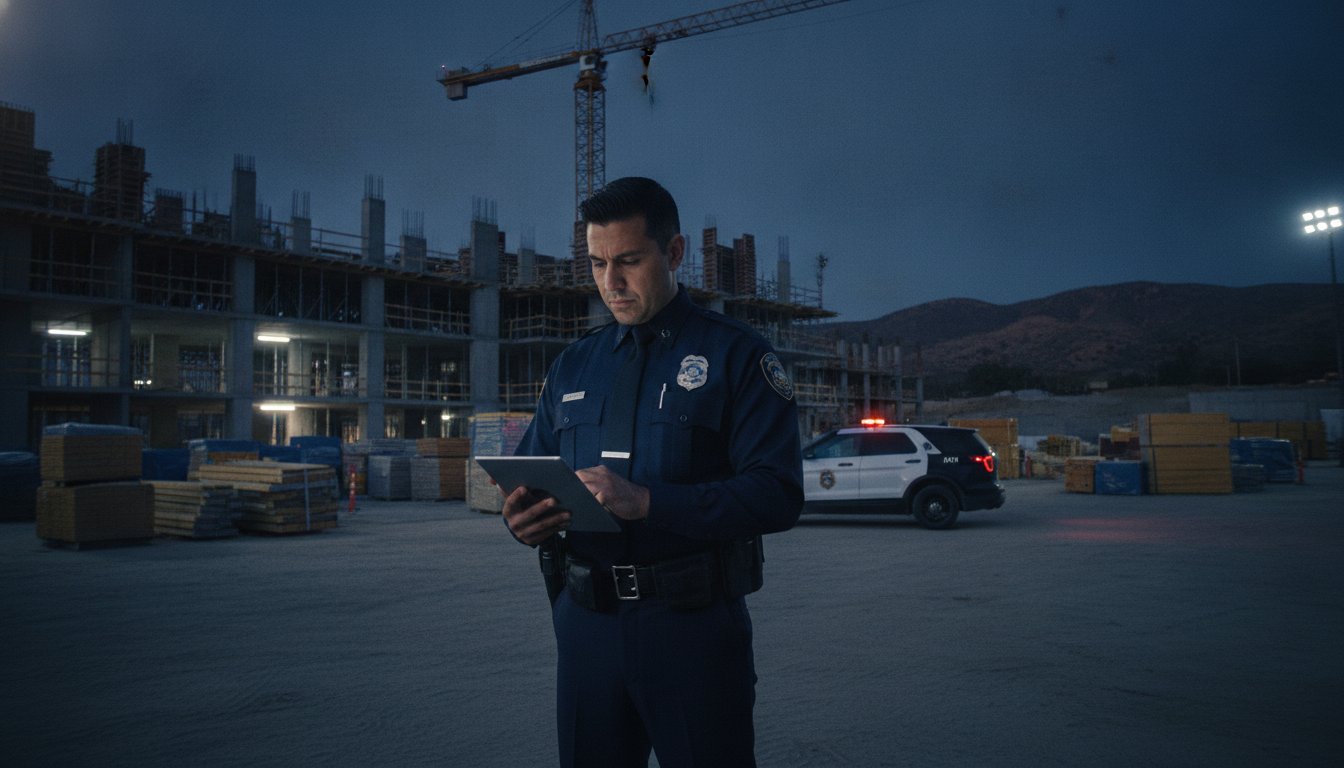
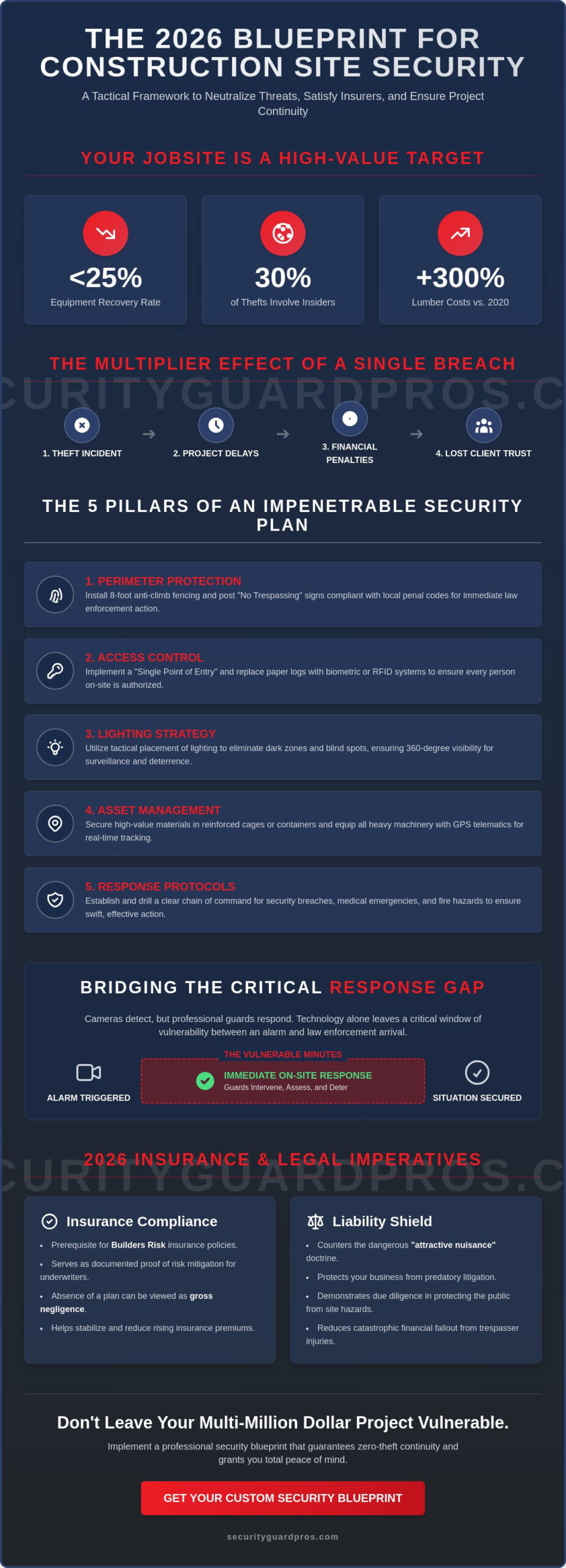
With recovery rates for stolen construction equipment currently sitting below 25%, a single security breach can jeopardize your entire project’s solvency. You have likely seen the impact of rising material costs first hand, as copper prices exceed $5 per pound and lumber remains 300% more expensive than it was in 2020. It is a reality that makes your jobsite a high-value target for both external syndicates and the 30% of thefts involving insiders. To protect your assets and stabilize rising insurance premiums, utilizing a professional construction site security plan template is no longer optional. It is a fundamental requirement for operational survival in 2026.
We understand the anxiety that comes with managing multi-million dollar liabilities under the constant threat of vandalism and theft. This guide promises to transform that vulnerability into a position of strength by providing a bulletproof security framework that satisfies even the most stringent insurance requirements. You will learn how to implement a layered defense strategy that combines physical barriers with advanced technological solutions. We will walk through the exact steps to finalize a professional security plan that ensures zero-theft continuity and grants you the peace of mind to focus on your core construction operations.
Key Takeaways
- Understand how a formalized security strategy satisfies stringent Builders Risk insurance requirements and mitigates high-value asset loss.
- Utilize our comprehensive construction site security plan template to establish rigorous perimeter protection and biometric access control protocols.
- Discover why cameras alone cannot stop active theft and how professional guards bridge the critical “Response Gap” between an alarm and police arrival.
- Learn the professional process for conducting a Site Risk Assessment (SRA) to identify specific vulnerabilities before they are exploited by bad actors.
- Explore how rapid deployment and decades of management experience can secure your jobsite across Los Angeles, Orange County, and San Diego.
What is a Construction Site Security Plan?
A construction site security plan is a tactical framework designed to neutralize threats before they manifest as financial losses. It is not merely a collection of locks and cameras. It is a comprehensive strategy that integrates physical security measures with rigorous operational protocols to protect your assets, personnel, and project timeline. Think of this document as your first line of defense against liability. Without a structured approach, your jobsite remains a vulnerable target for sophisticated theft rings and opportunistic vandals.
Many project managers mistakenly conflate site safety with site security. While OSHA regulations focus on preventing accidental injuries through fall protection and PPE, a professional construction site security plan template addresses intentional acts like theft, arson, and unauthorized entry. One protects your workers from the site; the other protects your site from the public. In the current market, a formal document is also a prerequisite for Builders Risk insurance compliance. Carriers now demand proof of documented risk mitigation before they will underwrite high-value projects in urban centers.
The Role of Security in Project Continuity
Theft does more than just drain your equipment budget. It triggers a “multiplier effect” that can derail an entire project. When long-lead-time materials like specialized HVAC units, custom glazing, or electrical switchgear are stolen, the delay isn’t measured in days; it’s measured in months. These interruptions lead to liquidated damages, labor rescheduling fees, and shattered client trust. A documented security plan reduces these “soft costs” by ensuring that vandalism and theft don’t escalate into a total work stoppage. You maintain momentum by maintaining a hardened perimeter.
Insurance and Liability: Meeting 2026 Standards
By 2026, insurance carriers have shifted from suggesting security to mandating it. In high-risk zones, underwriters view the absence of a documented security protocol as a sign of gross negligence. Beyond the threat of material loss, you face the legal reality of the “attractive nuisance” doctrine. If a trespasser is injured on your site because of inadequate fencing or a lack of professional oversight, the financial fallout can be catastrophic. For Southern California developers, a comprehensive security plan is a legal and financial necessity to shield the business from predatory litigation and rising premiums.
The 2026 Construction Site Security Plan Template Checklist
A high-performance construction site security plan template is more than a list of equipment. It’s a tactical checklist designed to eliminate the gaps that thieves exploit. Every site has vulnerabilities, but a disciplined approach to asset protection ensures these weaknesses are identified and fortified before the first shovel hits the ground. Hardening your site requires a surgical focus on five core pillars: perimeter integrity, access control, tactical lighting, asset tracking, and emergency response. Adhering to these standards allows you to maintain project continuity without the constant threat of loss.
- Perimeter Protection: Install anti-climb fencing and post “No Trespassing” signs that comply with local penal codes to facilitate immediate law enforcement action.
- Access Control: Replace outdated paper logs with biometric or RFID entry systems to ensure every individual on-site is authorized.
- Lighting Strategy: Eliminate dark zones where criminals hide by utilizing tactical placement that provides 360-degree visibility.
- Asset Management: Secure high-value materials in reinforced cages and utilize GPS telematics on all heavy machinery for real-time tracking.
- Response Protocols: Establish a clear chain of command for security breaches, medical emergencies, and fire hazards.
Hardening the Perimeter and Access Points
Perimeter protection is your primary deterrent. Deploy 8-foot anti-climb fencing with reinforced footers to prevent unauthorized breaches. It’s vital to implement a “Single Point of Entry” protocol. This forces all personnel and deliveries through a single, controlled bottleneck. Professional construction site security guards are essential here. They act as the gatekeepers who verify credentials, manage visitor logs, and conduct vehicle inspections. This human element ensures that your access control technology is never bypassed by simple social engineering or gate tailgating.
Surveillance and Lighting Integration
Shadows are an invitation to disaster. Use the “3-to-1” rule for lighting: ensure every high-value staging area is covered by at least three overlapping light sources. This prevents the “dark zones” that often blind surveillance cameras. While fixed camera systems provide stability, mobile surveillance units are often superior for evolving jobsites that change topography weekly. For the best results, integrate these tools with 24/7 dispatch coordination to ensure that any detected movement triggers an immediate, professional response. If you’re unsure about your site’s current vulnerability, a professional security assessment can pinpoint exactly where your perimeter is failing.
Finally, your plan must align with the NFPA 241 safety and security standard. This ensures your site is not only secure from theft but also compliant with fire prevention and emergency access requirements. A comprehensive construction site security plan template that includes these elements will protect your bottom line and satisfy your insurance provider’s strictest 2026 mandates.
Why Technology Alone Fails: The Necessity of Professional Guards
Relying solely on cameras is a reactive gamble that many developers lose. A passive lens can record a crime, but it cannot intervene. This creates a dangerous “Response Gap.” This is the critical window of time between an alarm trigger and the arrival of law enforcement. In high-density urban areas, police priority often shifts to violent crimes, leaving property theft at the bottom of the list. Your construction site security plan template must account for this delay by including a physical response capability. A professional guard service closes the gap, providing the immediate tactical intervention that hardware simply cannot offer.
Technology is a force multiplier, not a replacement for human judgment. While AI-powered surveillance can flag movement, it can’t clear a building, detain a suspect, or verify if a late-night visitor is an authorized subcontractor or a sophisticated thief. A disciplined security presence ensures that your site is not just monitored, but actively defended. This distinction is what separates a project that stays on schedule from one that collapses under the weight of “soft costs” and insurance claims.
Active Deterrence vs. Passive Recording
A camera is a witness; a guard is a deterrent. The psychological impact of a uniformed patrol on a potential trespasser is profound. Criminals look for the path of least resistance. When they see a disciplined, vigilant presence, they move on to softer targets. For high-value urban jobsites where the risk of confrontation is elevated, deploying armed security guards provides an elite level of protection that signals absolute zero-tolerance for breaches. Mobile patrols ensure that every corner of the site is inspected, moving beyond the fixed blind spots of static surveillance units.
Managing the “Human Element” of Jobsite Risks
Technology struggles to distinguish between a legitimate contractor and a sophisticated thief in a hi-vis vest. Internal theft accounts for 30% of construction site losses, often involving collusion or unauthorized after-hours access. Professional security guard services manage these human variables by enforcing strict gate protocols and verifying work orders in real time. Beyond crime prevention, guards provide a vital safety net for non-criminal emergencies. They identify early-stage fire hazards, detect water leaks before they cause structural damage, and resolve contractor disputes at the gate. By utilizing digital guard tour systems, these professionals provide a transparent, time-stamped record of every patrol, ensuring the accountability that a construction site security plan template requires for insurance validation.
How to Implement Your Security Blueprint in Southern California
Implementing a security strategy in the high-stakes Southern California market requires more than just checking boxes. It demands a disciplined, four-step execution phase that turns your construction site security plan template into a living defense system. This process ensures that your project remains compliant with 2026 insurance standards while maintaining the zero-theft continuity necessary for profitability. Execution is the bridge between a theoretical plan and a hardened jobsite.
The Site Risk Assessment (SRA) Process
Begin with a granular analysis of local crime data. A project in Anaheim faces different threats than one in San Diego. You must identify historical trends in equipment theft and vandalism specific to your zip code. Once the data is gathered, conduct a physical walkthrough. Look for “blind spots” where lighting is insufficient or fencing is compromised. Your security needs will scale as the project evolves. During the grading phase, your focus is on perimeter integrity. As you move into the finishing phase, the presence of high-value interior materials requires a shift toward internal access control and increased manpower. Establishing these phases early prevents the “security lag” that thieves exploit.
Maintaining the Chain of Custody and Incident Logs
Documentation is your primary defense against insurance denials. You must maintain detailed daily logs that record every visitor, delivery, and patrol round. These records establish a clear chain of custody for your assets. If a breach occurs, having a standardized reporting protocol for local law enforcement is non-negotiable. Professional security guard services in Los Angeles streamline this process by providing digital incident reports that are ready for immediate submission to underwriters. This level of accountability eliminates the ambiguity that often leads to unpaid claims and rising premiums.
Successful implementation also requires you to define clear roles and responsibilities for every person on-site. Your staff must know exactly how to secure their tools at the end of a shift, while your security personnel handle the broader perimeter defense. Conduct regular security audits every 30 days or whenever the site footprint changes significantly. These audits ensure that your construction site security plan template remains effective as the building rises and new vulnerabilities emerge. To ensure your blueprint is airtight from day one, request a professional site risk assessment and let our experts handle the heavy lifting of risk mitigation.
Expert Construction Protection with Security Guard Pros
A construction site security plan template provides the essential skeleton for your defense, but a template only becomes a “protective shield” when it’s backed by disciplined execution. Security Guard Pros brings over 70 years of collective management experience to the Southern California construction industry. We don’t just fill posts. We implement tactical blueprints that neutralize threats before they impact your bottom line. Our leadership team consists of seasoned veterans who understand that jobsite protection requires a proactive, no-nonsense approach to risk management.
Time is a luxury you don’t have when a project is active. We specialize in rapid deployment across Los Angeles, Orange County, and San Diego, ensuring that your site is hardened the moment high-value assets arrive. Whether you’re breaking ground on a commercial high-rise or finishing a residential tract, our team adapts to the evolving topography of your jobsite. We replace the uncertainty of unprofessional, low-tech security with a transparent and accountable partnership that allows you to focus on your core operations without the distraction of liability concerns.
Why SoCal Developers Trust Security Guard Pros
Developers in Southern California face unique regional challenges, from sophisticated copper theft rings to localized vandalism trends. Relying on a generic, one-size-fits-all agency often leads to predictable patrol patterns that criminals easily exploit. We utilize randomized mobile patrols and 24/7 dispatch coordination to ensure your site is never a soft target. Our guards are trained to handle the specific pressures of the SoCal market, maintaining a stern deterrent presence while managing the complex “human element” of contractor access and visitor logs. This localized expertise is the difference between a plan that looks good on paper and one that survives a real-world breach.
Get Your Custom Construction Security Plan
Every jobsite is a unique ecosystem with its own set of vulnerabilities. While you can start with a construction site security plan template, finalizing a bulletproof strategy requires a professional consultation. We work alongside your project managers to integrate our personnel with your existing surveillance technology or provide new, advanced solutions where gaps exist. We conduct rigorous site risk assessments to identify blind spots and ensure your plan satisfies every insurance mandate for 2026. Don’t leave your project’s continuity to chance or passive recording devices that can’t intervene in a crisis.
Take the final step toward a zero-theft jobsite. Our consultation-based approach ensures that your security is human-centric, professional, and tailored to your specific geographic risks. Contact Security Guard Pros for a customized construction security blueprint.
Take Command of Your Site’s Defense
Finalizing your construction site security plan template is the first tactical step toward total jobsite sovereignty. We’ve demonstrated that while high-tech hardware provides the eyes, professional personnel provide the decisive response necessary to eliminate the “Response Gap.” You now possess the checklist to harden your perimeter and the implementation steps to satisfy 2026 insurance requirements. Don’t let your project become another statistic in the rising trend of equipment and material theft. It’s a liability your budget cannot absorb.
As a licensed private security company with over 70 years of collective management experience, we specialize in construction and industrial site protection. We offer 24/7 dispatch and rapid deployment across Southern California to ensure your assets are never left vulnerable. It’s time to replace the anxiety of loss with a disciplined, veteran-led defense strategy that deters threats and secures your project timeline.
Secure Your Jobsite with a Professional Security Plan and focus on your core operations while we serve as your protective shield. Your project’s continuity depends on the strength of your defense. Let’s build with confidence.
Frequently Asked Questions
What are the 5 essential elements of a construction site security plan?
The five essential pillars of a robust strategy include hardened perimeter protection, strict access control, tactical lighting, asset tracking, and formalized emergency response protocols. Integrating these elements into your construction site security plan template ensures that your defense is multi-layered. This approach moves beyond simple fencing to create a comprehensive shield that protects both physical materials and your project’s overall timeline.
Does my insurance require a documented security plan for my jobsite?
Most Builders Risk insurance carriers in 2026 mandate a documented security plan as a condition of coverage for high-value projects. Underwriters view the lack of a formal document as a sign of gross negligence. Having a professional plan in place doesn’t just satisfy compliance requirements; it also helps stabilize rising premiums by demonstrating proactive risk mitigation and accountability to your insurance provider.
How do I prevent copper theft on a construction site?
Preventing copper theft requires a combination of secure storage and active deterrents. With copper prices exceeding $5 per pound in 2026, it’s vital to utilize reinforced material cages and schedule just-in-time deliveries to minimize on-site exposure. Professional patrols are the most effective way to deter thieves who target these high-value metals during the vulnerable windows when your crew isn’t on-site.
Are security guards more effective than cameras for construction sites?
Guards are significantly more effective for active intervention because cameras are passive witnesses that cannot physically stop a crime. While technology is a valuable force multiplier, it can’t close the “Response Gap” between an alarm trigger and police arrival. A disciplined security presence provides the immediate tactical response necessary to detain suspects and prevent property damage in real time.
How often should a construction security plan be updated?
Review and update your security plan at least every 30 days or whenever the site topography changes significantly. As a project moves from grading to the finishing stages, new vulnerabilities emerge that require different tactical responses. Regular audits ensure that your construction site security plan template remains a living document that adapts to the current state of your jobsite.
What is the best way to manage access control at a large construction gate?
Implement a “Single Point of Entry” protocol managed by professional guards to maintain absolute control over your perimeter. Large gates are vulnerable to tailgating and social engineering, making human verification of biometric or RFID credentials essential. This disciplined approach ensures that every individual and vehicle entering the site is authorized and logged for legal and insurance purposes.
Can security guards help with fire watch requirements on a jobsite?
Professional security guards are frequently utilized to satisfy fire watch requirements, especially during hot work phases or after-hours. They’re trained to identify early-stage hazards like smoldering debris or faulty electrical connections that cameras might miss. This dual role enhances site safety and ensures compliance with NFPA 241 standards, protecting your project from the catastrophic financial impact of fire loss.
How do I choose between armed and unarmed guards for my construction project?
Base your decision on local crime data and the specific value of the assets on your site. For high-risk urban zones or projects with millions of dollars in specialized equipment, armed guards provide an elite level of deterrence that signals zero tolerance. Unarmed guards are often sufficient for lower-risk areas where the primary goal is access control and basic vandalism prevention.