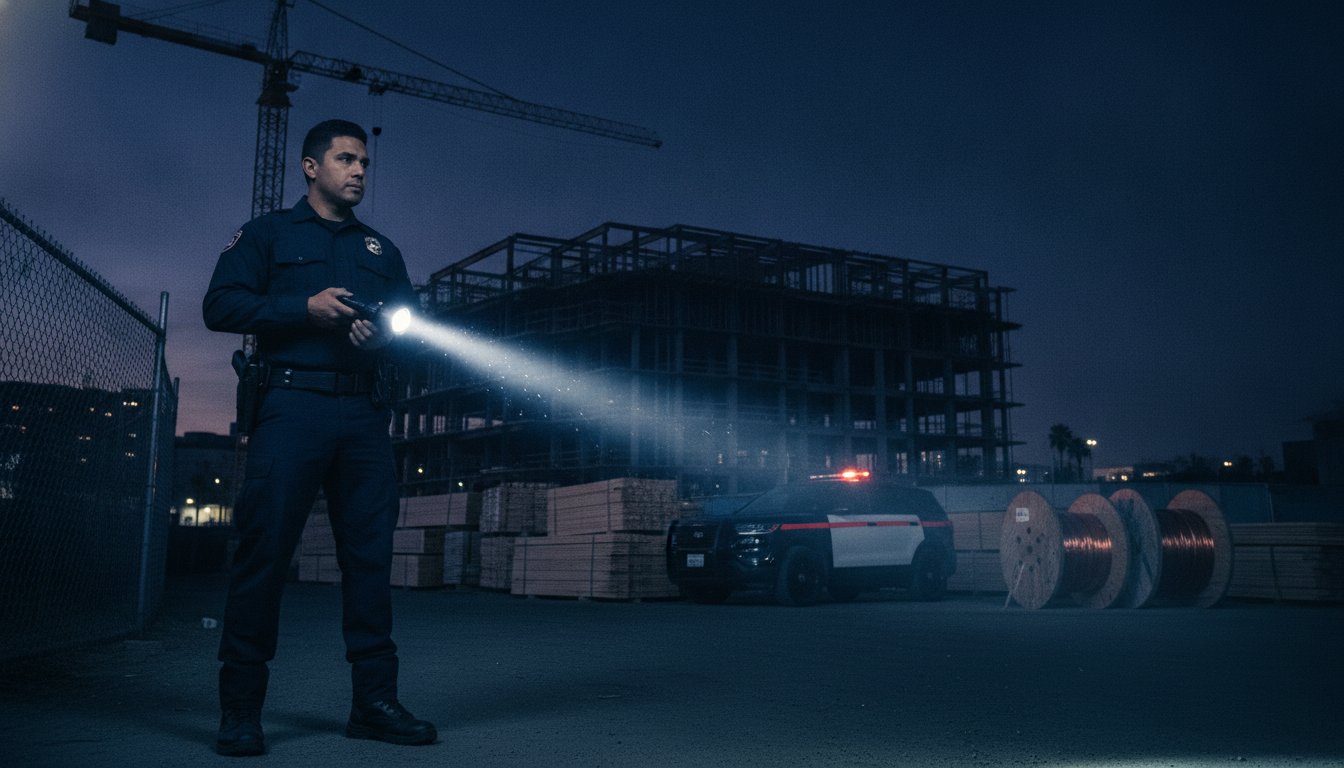
With spot copper prices exceeding $5 per pound in early 2026, construction sites have become prime targets for sophisticated theft rings that cost the industry over $2 billion annually in materials and equipment. You’ve likely experienced the frustration of arriving at a jobsite only to find vital machinery missing or copper wire stripped. These incidents don’t just stall progress; they trigger insurance premium hikes and jeopardize your project’s profitability. Effective construction site theft prevention requires more than just a locked gate or a basic camera. It demands a tactical, layered defense that treats security as an active operation rather than a passive expense.
We understand the anxiety of leaving your high-value assets vulnerable during off-hours. This comprehensive guide provides the blueprint to eliminate jobsite losses through a combination of professional vigilance and modern technology. You’ll learn how to leverage new regulations like California Assembly Bill 476 and deploy advanced monitoring to secure your perimeter. We’ll examine the shift from traditional hardware to adaptive, human-centric security strategies that ensure your project reaches completion without a single dollar lost to criminal interference.
Key Takeaways
- Calculate the true impact of “delay days” and labor downtime to understand why equipment loss costs far more than the initial replacement price.
- Deploy a proactive framework for construction site theft prevention by combining high-visibility perimeter barriers with strict access control for all personnel.
- Identify the “false sense of security” provided by unmonitored cameras and why a physical presence is required to stop crimes that technology only records.
- Ensure full compliance with California BSIS regulations while addressing specific regional theft trends across Los Angeles, Anaheim, and San Diego.
- Build a custom security plan based on professional site analysis to close the unique vulnerability gaps in your specific project layout.
Table of Contents
The Rising Cost of Construction Site Theft in 2026
Construction sites remain the primary target for professional criminal syndicates in 2026 because they offer a high-density environment of liquid assets. While the replacement value of equipment is staggering, the industry faces a dual-threat of organized theft and opportunistic looting. According to Construction equipment theft statistics, more than 11,000 incidents occur annually. This represents nearly 1,000 reported thefts every month, a frequency that proves traditional security measures are failing. Stop treating security as an afterthought. You’re running a multi-million dollar operation; protect it with the same discipline you apply to your engineering standards.
Modern construction site theft prevention must account for “delay days.” When a critical piece of machinery vanishes overnight, your skilled labor force stands idle while overhead costs continue to mount. Missing tools lead to missed milestones, which often trigger liquidated damages clauses in prime contracts. Beyond the balance sheet, chronic theft erodes subcontractor trust. Reliable crews will eventually refuse to work on sites where their personal equipment isn’t secure, leading to a shortage of quality labor that can derail even the most well-funded projects. Basic chain-link fencing and static lighting are no longer sufficient deterrents; they’re mere speed bumps to professional crews equipped with battery-powered grinders and thermal imaging.
High-Value Targets: What Thieves Want Most
With spot copper prices exceeding $5 per pound in early 2026, raw materials are often more profitable for thieves than the machinery itself. Organized jobsite theft is the systematic targeting and extraction of high-value assets by professional criminal syndicates using specialized logistics and pre-arranged resale channels.
- Loaders, tractors, and excavators: The top three machinery targets for resale or export.
- Copper wiring and piping: High-demand scrap that is virtually untraceable once stripped.
- Small power tools: High-volume items that boast a recovery rate of less than 7%.
The Hidden Liability of Unsecured Sites
The risk extends far beyond the inventory list. When theft attempts are interrupted or fail, frustrated intruders often resort to vandalism or arson, turning a potential equipment loss into a total site catastrophe. You also face significant legal exposure under the attractive nuisance doctrine if unauthorized individuals are injured while accessing your unsecured site. Insurance carriers are increasingly aggressive in 2026; repeated claims for construction site theft prevention failures can lead to “uninsurability,” making it nearly impossible to secure future project bonding or coverage.
Layered Defense: The Proactive Theft Prevention Framework
Effective construction site theft prevention relies on the principle of defense in depth. You cannot depend on a single barrier to protect millions in assets. Instead, implement a hierarchy of obstacles designed to increase the time, effort, and risk required for an intruder to succeed. This proactive framework shifts the burden from your balance sheet to the criminal’s planning phase. By creating multiple points of failure for a thief, you ensure that a breach at the perimeter doesn’t result in a total loss of inventory.
The period between 6 PM and 6 AM is the high-risk window for your project. This “Golden Hour” of theft occurs when the site clears and visibility drops. During these hours, your strategy must transition from managing personnel to active deterrence. Don’t leave high-value tools in the back of trucks or open trailers. Use hardened storage containers, the jobsite “vault,” and secure them with heavy-duty puck locks that resist bolt cutters. Block heavy machinery with other equipment or use specialized wheel locks to prevent unauthorized movement.
Perimeter Hardening and Visibility
Your perimeter is the first line of resistance. Standard chain-link fencing is often insufficient against professional syndicates equipped with power tools. Upgrade to anti-climb mesh or reinforced barriers that provide a clear visual deterrent. Strategic lighting is equally critical. Eliminate shadows where criminals hide by installing motion-activated LED systems that flood the area when movement is detected. High-visibility signage stating that the site is under professional protection adds legal weight and discourages opportunistic looters before they even attempt a breach.
Access Management and Logistical Security
Control the flow of people to maintain site integrity. Implement electronic reporting for all site check-ins to ensure every employee, vendor, and subcontractor is accounted for. To prevent criminals from learning your security patterns, utilize randomized Vehicle Mobile Patrols. These unpredictable visits disrupt the “casing” process used by organized rings to identify gaps in your schedule.
A significant gap in traditional security is the failure to integrate safety protocols with theft deterrence. While Fire Watch Services are often a regulatory necessity during hot work or system outages, these trained professionals act as an additional set of eyes on your assets. By combining fire safety with active surveillance, you create a comprehensive protective shield. This integrated approach ensures that while your site is protected from fire hazards, it remains a hard target for theft, maximizing your security budget through dual-purpose vigilance.
Human Vigilance vs. Passive Security Technology
Stop treating your jobsite like a movie set where cameras provide an illusion of safety. Hardware is a witness, not a deterrent. If an organized ring targets your assets, they’ll be gone in under ten minutes, leaving you with nothing but grainy footage of masked suspects and a massive insurance claim. True construction site theft prevention requires an active, human element capable of immediate intervention. Consider the cost-benefit ratio: professional staffing fees are a fraction of the $100,000 loss associated with a single stolen excavator or the project-killing delays caused by stripped copper wiring. Prevention is an investment in your project’s timeline; loss is a permanent stain on your bottom line.
Relying solely on passive systems creates a dangerous “false sense of security.” When an alarm triggers at 3 AM, the typical response time for remote monitoring or law enforcement can exceed twenty minutes, which is an eternity for professional thieves. By the time the police arrive, your high-value tools are already being offloaded at a secondary location. Human guards bridge this critical gap by providing a real-time response that neutralizes threats at the point of entry. They transform your site from a vulnerable target into a fortified zone that criminals will intentionally avoid.
Why Cameras Aren’t Enough
Modern AI detection often fails in the grit and chaos of a working construction environment. Wind-blown tarps, blowing dust, and nocturnal wildlife trigger constant false positives, leading to “alarm fatigue” for remote monitors. This creates a dangerous lag in response time. Even the most advanced systems face the “Mask and Vanish” problem, where suspects are long gone before authorities arrive. While technology records the crime for the insurance company, armed security guards provide an immediate deterrent that technology cannot match, stopping the crime before it begins.
The Tactical Advantage of On-Site Guards
Our guards operate with a level of professional judgment that silicon cannot replicate. They don’t just watch; they analyze. An on-site guard identifies the “pre-attack” indicators, such as a vehicle circling the block or a perimeter fence that has been pre-cut for later access. This tactical advantage is backed by active patrolling rather than stationary observation. Our teams are trained to liaise directly with local Southern California law enforcement, providing the real-time intelligence required for priority dispatch. To ensure total accountability, every shift includes detailed electronic reporting. These daily safety audits give site managers a transparent view of vulnerabilities, ensuring your project remains a hard target for construction site theft prevention 24/7.
Southern California Compliance and Local Risk Factors
Operating in Southern California requires a deep understanding of the Bureau of Security and Investigative Services (BSIS) regulations. Compliance isn’t just about avoiding fines; it’s about ensuring your construction site theft prevention strategy meets the highest legal and professional standards. In 2026, the Los Angeles County Board of Supervisors intensified their focus on the copper theft crisis, passing motions that demand stricter oversight and faster reporting. If your security provider doesn’t understand these local nuances, your site remains a legal and financial liability. Trusting an unlicensed or inexperienced firm isn’t just a risk; it’s a failure of management that can lead to project shutdowns or insurance denials.
Regional hotspots like Los Angeles, Anaheim, and San Diego face specific theft trends that vary by zip code. Urban jobsites near major transit hubs are especially vulnerable to rapid-strike theft rings that utilize the freeway system for quick escapes. You need a partner with a 24/7 local dispatch center capable of rapid emergency deployment. This localized expertise allows for a “protective shield” approach, where security measures are tailored to the specific crime statistics of the neighborhood rather than a generic, one-size-fits-all plan.
Securing High-Risk Zones in Los Angeles and Orange County
High foot traffic and proximity to public transit create unique challenges for urban developers. Our construction site security guards have extensive experience managing these variables. For instance, in Canoga Park, our teams successfully mitigated local gang-related vandalism by establishing clear perimeter dominance and coordinating with the LAPD’s regional divisions. In Anaheim, security plans must also account for specific municipal ordinances regarding noise and light pollution. We balance these local requirements with the need for high-visibility deterrence, ensuring your site remains a hard target without violating city codes.
Fire Watch and Safety Compliance
California law mandates professional fire watch personnel whenever a building’s fire protection system is out of service or during high-risk “hot work” phases. Failing to meet these fire marshal requirements can lead to immediate work stoppages and massive daily fines. We provide a dual-purpose solution where fire watch guards monitor for both ignition hazards and unauthorized intruders. This integration ensures your site passes inspector audits while maintaining a steady pulse on construction site theft prevention. Every patrol is documented with precise electronic reporting, creating a transparent audit trail that satisfies both the fire marshal and your insurance carrier.
Don’t leave your project’s safety to chance. Secure your Southern California jobsite today with the seasoned experts at Security Guard Pros.
Implementing a Custom Security Plan with Security Guard Pros
Secure your investment with a strategy forged from over 70 years of collective management experience. We don’t offer generic security; we build a protective shield tailored to your specific blueprint. Our approach to construction site theft prevention begins with an exhaustive site analysis to identify the exact vulnerabilities that professional thieves exploit. While competitors offer a one-size-fits-all checklist, we provide a tactical operation designed to neutralize threats before they reach your high-value assets. Trust a partner that takes your project’s safety with extreme seriousness, allowing you to focus on your core operations without the distraction of liability concerns.
Speed is a critical component of our protective framework. If your existing system fails or a new threat emerges, our 24/7 dispatch center enables rapid deployment to secure your site within hours. This responsiveness is backed by transparent accountability. You’ll receive daily electronic logs and real-time communication, ensuring you’re never in the dark about your site’s status. We replace the unprofessionalism of unmonitored gates with a disciplined, vigilant presence that maintains the integrity of your project from groundbreaking to completion.
The Onboarding Process: From Assessment to Protection
Our onboarding process is designed to be hassle-free and efficient. We move through three critical stages to establish your defense:
- Step 1: Professional Site Walk-Through: We conduct a comprehensive threat assessment to map out blind spots, weak perimeter points, and high-value storage zones.
- Step 2: Tactical Deployment: Based on the assessment, we deploy trained personnel from our Security Guard Services, choosing between armed or unarmed guards to match your specific risk profile.
- Step 3: Continuous Oversight: Our management team performs randomized audits and performance metrics to ensure our guards remain a stern deterrent to all intruders.
Peace of Mind for Project Managers
Focus on your build. While you manage crews and timelines, we maintain a disciplined perimeter that eliminates the anxiety of off-hour losses. Whether you require short-term emergency Fire Watch Services or a multi-year contract for a large-scale development, our solutions are fully scalable to your project’s lifecycle. We provide the calm confidence you need to manage your site effectively, knowing your machinery and materials are under the protection of seasoned veterans. Stop reacting to losses and start preventing them with a professional partner. Request a customized construction security quote today and secure your site with the industry’s most reliable protective shield.
Command Your Site’s Security in 2026
Effective construction site theft prevention is no longer a matter of simple fencing or unmonitored cameras. It requires a tactical, human-centric approach that anticipates threats before they arrive at your perimeter. By establishing a layered defense and prioritizing professional vigilance over passive technology, you eliminate the specific vulnerabilities that organized theft rings exploit. Ensure your project remains fully compliant with California BSIS standards and local Southern California ordinances to avoid costly legal setbacks, insurance hikes, and project delays. It’s time to stop the cycle of loss and protect your project’s profitability from day one.
Trust the seasoned veterans at Security Guard Pros to defend your assets. With over 70 years of combined security management experience and a 24/7 rapid deployment dispatch center, we act as the protective shield your business deserves. As a licensed private security company, we provide the calm confidence necessary for you to focus on building while we secure the perimeter. Secure Your Jobsite with a Professional Shield Today and finish your project with zero losses. Your peace of mind is our mission.
Frequently Asked Questions
What are the most common items stolen from construction sites in Southern California?
Copper wiring, piping, and heavy equipment like loaders and excavators are the most frequent targets. With copper prices exceeding $5 per pound in early 2026, raw materials are often stripped from walls before a project is even dried in. Small power tools also disappear at high rates because they’re easy to transport and resell. Professional construction site theft prevention strategies focus on securing these high-liquidity assets first to minimize the impact of organized theft rings.
How much does professional construction site security typically cost?
The cost of professional security is determined by your site’s specific risk profile, the number of entry points, and whether you require armed or unarmed personnel. Factors such as the duration of the contract and the inclusion of vehicle patrols also influence the total investment. You should consult with a licensed provider for a customized analysis. Investing in professional protection is a strategic move that prevents the massive financial drain of equipment replacement and project delays.
Is an armed guard necessary for a standard residential construction site?
Armed guards aren’t always a requirement for standard residential sites, but they become a necessary deterrent in high-crime zones or when storing high-value materials. Unarmed guards provide a strong physical presence that stops most opportunistic looters. However, if your project is located in a regional hotspot with a history of gang activity or aggressive theft, armed personnel offer the higher level of protection needed to maintain a total protective shield over your assets.
Can security guards also perform fire watch duties in California?
Yes, security guards in California can perform fire watch duties provided they meet state regulatory requirements and are properly trained in hazard identification. This dual role is a highly efficient way to manage your budget while ensuring your site remains compliant with fire marshal audits. These professionals monitor for ignition sources and equipment malfunctions during “hot work” phases while simultaneously maintaining a vigilant eye on construction site theft prevention to stop unauthorized intruders.
What is the fastest way to secure a site after a perimeter breach?
Contacting a security provider with a 24/7 dispatch center and rapid deployment capabilities is the most effective way to secure a breached site. While you may be tempted to rely on local authorities, their response times can vary significantly. A professional security firm can have personnel on-site within hours to establish a temporary perimeter and prevent secondary losses. This immediate intervention stops a minor incident from turning into a total jobsite catastrophe.
Do security guards provide their own electronic reporting systems?
Professional security firms utilize sophisticated electronic reporting systems to provide site managers with transparent, real-time data. These digital logs track guard movements, patrol frequencies, and any suspicious activity identified during a shift. Instead of relying on unreliable paper trails, you’ll receive daily safety audits that verify the integrity of your site. This technology ensures total accountability and allows you to review security metrics from your office or mobile device at any time.
How does professional security impact my construction insurance premiums?
Implementing professional security can significantly lower your insurance liabilities by reducing the frequency and severity of claims. Many carriers offer premium credits for sites that maintain a physical guard presence or utilize verified access control systems. Beyond the immediate discount, preventing theft helps you avoid uninsurability. Repeated claims for stolen machinery or vandalized property can lead to policy cancellations, making it nearly impossible to secure the bonding required for future Southern California projects.
What should I look for when evaluating a security guard company in Los Angeles?
Prioritize BSIS licensing and 24/7 management support when evaluating a security partner in Los Angeles. Look for a company with a proven track record in the local region and the ability to provide specialized construction security plans. Transparency is key; they should be willing to share performance metrics and regulatory credentials openly. A seasoned veteran firm with localized expertise understands the specific crime trends of LA neighborhoods and provides a more disciplined, effective deterrent than a generic agency.