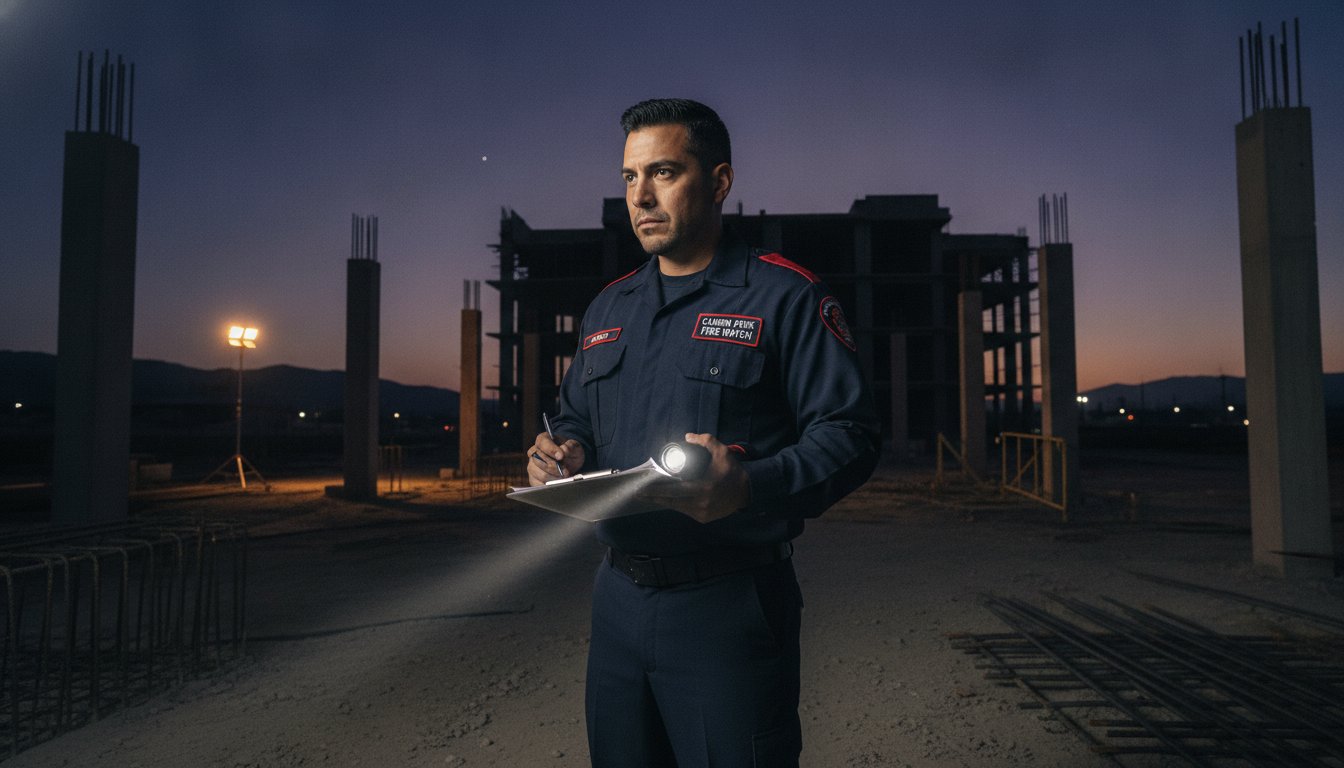
What if the difference between a successful project milestone and a crushing LAFD fine is exactly thirty minutes? It’s a question many California developers face when they realize that fire watch requirements for construction sites are often a moving target. Experienced commercial contractors like DGR Construction Co. know that staying ahead of these safety mandates is vital for keeping a project on schedule. You likely already know the anxiety of trying to reconcile conflicting OSHA standards with NFPA 51B rules while a Fire Marshal waits for your documentation. It’s a high-stakes environment where a single oversight regarding system outages or hot work can lead to a costly Stop Work Order.
We’ve designed this guide to eliminate that uncertainty and provide a clear, regulatory roadmap for 2026. You’ll master the complex timelines that dictate your site’s safety, from the mandatory 30-minute post-hot work checks to the 24/7 monitoring required during extended system impairments. We’ll preview the specific patrol frequencies demanded in jurisdictions like Orange County and Ventura County, giving you the professional confidence to pass any inspection without a single citation.
Key Takeaways
- Differentiate between the 30-minute OSHA minimum and the 60-minute NFPA 51B standard to ensure your site exceeds local Fire Marshal expectations.
- Identify the mandatory triggers for 24/7 monitoring when fire alarms or sprinkler systems are impaired for more than four hours in a 24-hour period.
- Master the specific fire watch requirements for construction sites in 2026, including how building materials like wood-frame structures extend your liability window.
- Learn how to maintain a legally defensible logbook that serves as your primary shield during a Fire Marshal audit or insurance investigation.
- Understand the critical risks of using untrained internal staff and how professional oversight prevents costly Stop Work Orders and heavy fines.
Understanding Fire Watch Durations: Hot Work vs. System Failure
Professional fire watch is a proactive, disciplined safety measure. It’s not a passive observation role; it is a dedicated sentinel service deployed during high-risk periods to detect and suppress fire hazards before they escalate into catastrophes. While a quick internet search might lead you to the “Firewatch” video game, let’s be clear: real-world fire watch is about rigorous legal compliance and protecting multi-million dollar assets. It is a serious responsibility that requires a seasoned eye and an uncompromising commitment to safety. The specific fire watch requirements for construction sites are determined by the nature of the risk and the mandates set by your local Authority Having Jurisdiction (AHJ).
Duration is never a one-size-fits-all calculation. You must distinguish between task-based monitoring and status-based monitoring. Hot work monitoring is typically temporary, focused on the immediate aftermath of a specific activity. In contrast, a system outage requires a continuous watch that remains active 24/7 until the building’s life safety systems are fully restored and certified. Failing to understand this distinction is a fast track to a Fire Marshal citation or a total site shutdown.
What Qualifies as Hot Work on Construction Sites?
Hot work includes any activity that generates sparks, open flames, or significant heat. Common tasks like welding, brazing, cutting, and grinding fall under this category. These activities are dangerous because sparks don’t always cause immediate flames. They can bounce into wall cavities or settle into sawdust and smolder for hours before erupting into a full-scale fire. To mitigate this, you must strictly follow established Hot work procedures. This includes the “35-foot rule,” which requires you to clear all combustible materials within a 35-foot radius of the work area before any sparks fly. If you can’t move the materials, you must shield them with fire-rated blankets.
What Constitutes a Fire System Failure?
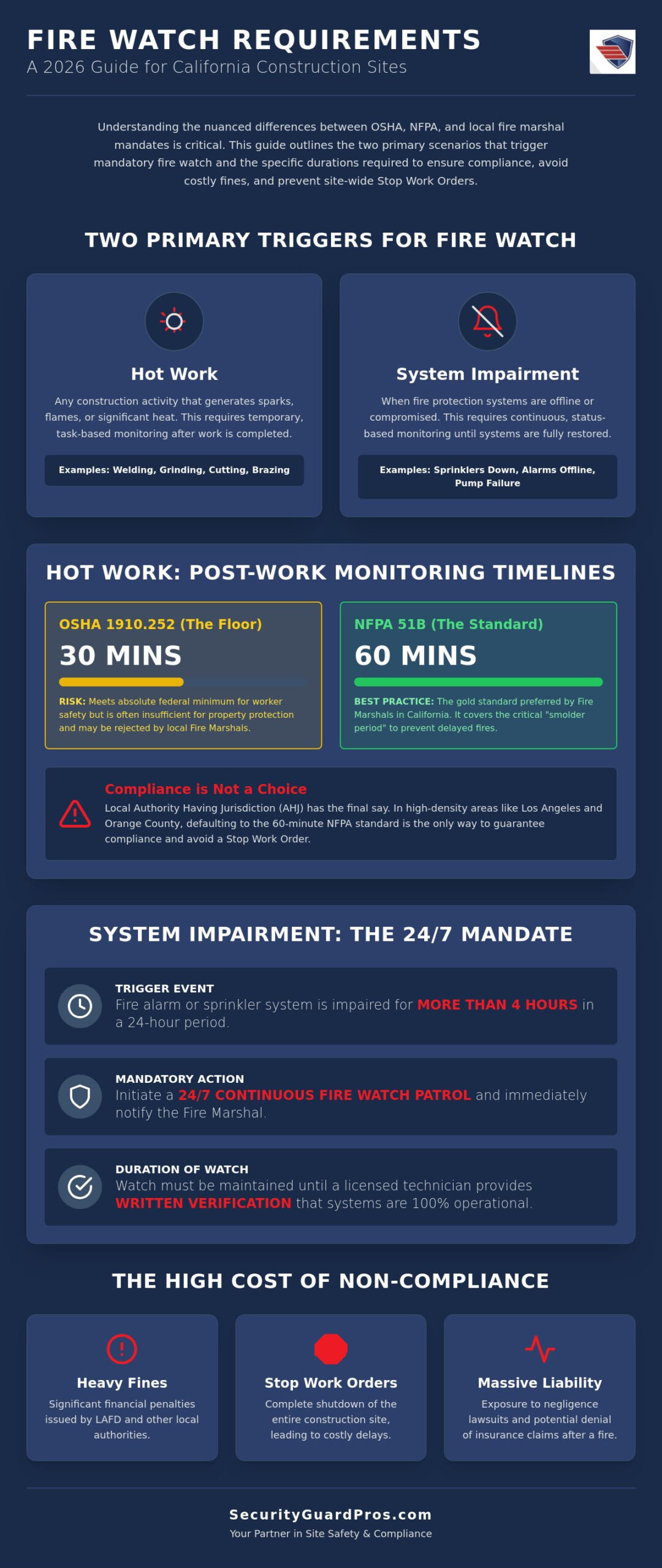
A fire system failure occurs when your primary protection layers are compromised. This includes inoperable sprinklers, malfunctioning fire alarms, or smoke detection systems that are offline due to maintenance or accidental damage. On many sites, water main breaks or fire pump failures during early construction phases also trigger these requirements; in such cases, partnering with a specialist like SoCal Underground and Engineering can help restore critical infrastructure. If your system is out of service for more than four hours within a 24-hour period, you have a legal obligation to notify the Fire Marshal immediately. Once a failure is identified, the fire watch requirements for construction sites shift to a continuous patrol model. You must maintain this presence until a licensed technician provides written verification that the systems are 100% operational.
Standard Durations for Post-Hot Work Monitoring
Compliance is not a suggestion. It is a legal mandate. When managing hot work, the most critical decision involves how long a guard stays on-site after the last spark falls. While federal standards set a baseline, local fire watch requirements for construction sites in California often demand more. You must navigate the gap between OSHA’s 30-minute minimum and the NFPA’s 60-minute industry standard. In 2026, the trend is clear: Fire Marshals are increasingly defaulting to the 60-minute window to account for the “smolder period.” This is the volatile timeframe where heat trapped in structural materials can transition from a glow to an active blaze.
Choosing the shorter window might save thirty minutes of labor, but it exposes your project to massive liability. According to California fire watch regulations, the AHJ (Authority Having Jurisdiction) has the final say. If an inspector finds you are only following the 30-minute federal minimum in a high-density urban area like Los Angeles or San Diego, they can issue an immediate Stop Work Order. Professional teams don’t cut corners; they exceed the minimum to protect the build. If you are unsure which standard applies to your specific permit, consulting with experts in Fire Watch Services can clarify your local obligations before an inspector arrives.
OSHA vs. NFPA: Which Rule Takes Precedence?
OSHA 1910.252 serves as the absolute floor for worker safety. It requires a 30-minute check. However, NFPA 51B is the gold standard for property protection. Most Southern California municipal codes incorporate NFPA standards by reference. If a fire occurs at the 45-minute mark and you’ve already dismissed your watch, “OSHA compliance” won’t protect you from a negligence lawsuit. Always follow the stricter 60-minute rule to maintain total legal coverage and professional accountability.
When 60 Minutes Isn’t Enough
Extreme conditions require extreme vigilance. If your team is working near highly combustible cellulose insulation, chemical storage, or dry construction debris, a one-hour watch is often insufficient. Hidden spaces like attics, wall cavities, or crawl spaces can harbor embers that remain dormant for hours. High-wind days in regions like the Inland Empire or Orange County can also carry sparks far beyond the 35-foot safety zone. In these high-risk scenarios, Fire Marshals frequently mandate an extended 4-hour monitoring period to ensure the site is truly cold and safe for overnight closure.
How Long is Fire Watch Required for System Outages?
Outages represent the most expensive and legally sensitive aspect of compliance. While hot work monitoring is measured in minutes, system failure durations are often measured in days or even weeks. If your fire alarm or sprinkler system is compromised, the fire watch requirements for construction sites demand an immediate transition to a “Continuous Watch” model. This means a 24/7 physical presence is non-negotiable until the system is 100% restored and certified. You don’t have the luxury of “checking in” on the site; a dedicated guard must remain on-site at all times to serve as the building’s eyes and ears.
The legal basis for this is found in the California Code of Regulations, which mandates specific duties during impairments. NFPA 25 standards further clarify that any impairment lasting more than 10 hours in a 24-hour period for water-based systems, or 4 hours for fire alarms, triggers this mandatory coverage. You must calculate your timeline from the exact moment the failure is detected. The watch only concludes once you receive the final “green tag” inspection from a licensed fire protection contractor. After restoration, many developers transition their specialized fire watch personnel back into standard security guard services to maintain general site integrity and prevent unauthorized access.
The 4-Hour Rule for Reporting Outages
Speed is your best defense against liability. You’re legally required to notify the Authority Having Jurisdiction (AHJ) within four hours of discovering a life safety system failure. Failure to report an outage to the Fire Marshal is a serious violation. It can lead to immediate site evacuation and massive fines that dwarf the cost of a professional guard. Professional guards provide the necessary paper trail to prove compliance. They maintain detailed logs that document their arrival and patrol frequency, ensuring you have the evidence required to satisfy a sudden AHJ inquiry or insurance audit.
Ending the Outage Watch Safely
Don’t dismiss your guards prematurely. A repair order from a contractor is a good sign, but it isn’t the legal end of your obligation. The watch must continue until your monitoring station confirms they’re receiving active signals from your fire panel. You need a signed-off report from a licensed professional verifying that all zones are clear and operational. Once you have this documentation, you can officially “close” the fire watch order with the Fire Marshal. This rigorous process ensures that the site is never left vulnerable during the critical transition from a state of impairment back to full protection.
Factors That Extend Your Fire Watch Requirements
Compliance is rarely a matter of checking a single box. The physical reality of your jobsite dictates the duration and intensity of the patrol. In Southern California, fire watch requirements for construction sites scale based on the inherent risk of the structure and its surroundings. A vacant concrete warehouse under renovation carries a different risk profile than a five-story wood-frame residential complex in a high-density neighborhood. If your project involves Type V construction, expect the Fire Marshal to be far less flexible with patrol intervals and duration requirements. Wood is fuel. Steel is not. This fundamental difference determines how long a guard must remain vigilant after the crews head home.
Occupancy status is the most significant factor in duration extensions. If a portion of the building is occupied or adjacent to residential units, the safety of human life takes absolute precedence. There are no waivers for occupied structures. Additionally, the presence of hazardous materials, such as roofing chemicals or pressurized gas cylinders, can trigger mandatory 24/7 watch orders from the LAFD or SDFD. These high-value assets and dangerous materials require a sophisticated level of oversight that goes beyond a simple walk-through. Secure your site and maintain full compliance by hiring a licensed CA private security company to manage these complex variables.
The Role of the Authority Having Jurisdiction (AHJ)
The local Fire Marshal, known as the AHJ, holds the final word on your compliance timeline. While California’s Title 24 provides the framework, cities like Los Angeles and Anaheim have unique local amendments that often exceed state minimums. You can sometimes negotiate a reduced watch if you can prove that partial systems, such as temporary standpipes, are operational. However, this negotiation requires professional documentation. If you lack a clear patrol log or a certified fire watch plan, the AHJ will default to the most restrictive and expensive duration possible to mitigate their own liability.
Site-Specific Risk Assessments
A professional security analysis evaluates the “fuel load” of your current construction phase. During the framing stage, the risk is at its peak. This is when construction site security guards become indispensable. They integrate fire watch duties into their general security rounds, ensuring that a single pair of eyes is monitoring for both intruders and smoldering embers. Multi-family construction projects never receive duration waivers because the risk of a fast-moving fire in a residential zone is too high. Vigilance must be constant, documented, and professionally managed to avoid a Stop Work Order.
Professional Fire Watch: Ensuring Compliance and Safety
Assigning a general laborer or an apprentice to “keep an eye out” is a common mistake that leads to catastrophic liability. Untrained staff lack the specialized knowledge to identify the subtle thermal signatures of a deep-seated smolder. When an incident occurs, the legal inquiry will immediately scrutinize the qualifications of your safety personnel. If your watch was performed by someone without professional training, your insurance coverage may be voided, and you’ll face the full weight of civil litigation. Professional fire watch requirements for construction sites demand a level of vigilance that only a seasoned security partner can provide.
Security Guard Pros acts as your protective shield, leveraging over 70 years of collective management experience to ensure your site remains operational and compliant. We don’t just provide a body in a vest; we provide a disciplined system of oversight. Our guards are trained to understand the specific risks associated with California’s construction landscape, from high-rise developments in Los Angeles to sprawling industrial sites in San Diego. By utilizing a licensed CA private security company, you transition from a state of vulnerability to a state of absolute security.
What a Professional Logbook Must Contain
Your logbook is your only legal defense during an audit or after a fire event. It must be a chronological, tamper-proof record of every patrol. A professional logbook must include:
- Precise check-in timestamps for every zone, often at 15 to 30-minute intervals depending on the AHJ mandate.
- Detailed descriptions of the specific areas inspected, including high-risk zones like fuel storage or recently completed hot work areas.
- A record of all communication with site management and local fire departments, especially regarding system status updates.
- Documented findings of any potential hazards, such as blocked fire exits or improperly stored combustibles, and the immediate corrective actions taken.
Why Rapid Deployment Matters in SoCal
In the fast-paced Southern California market, a delay of even a few hours can result in a “Stop Work Order” or a “Vacate Premises” notice. When a system failure is detected, you need a partner capable of 24/7 rapid deployment. We serve Los Angeles, Orange County, and San Diego with a dedicated 24/7 dispatch center, ensuring that compliant guards are on your site before the inspector arrives. This responsiveness prevents the unexpected costs of a project shutdown and keeps your timeline on track. Don’t leave your compliance to chance. Secure your site with professional fire watch today and focus on your core operations while we handle the safety documentation.
Secure Your Project and Eliminate Regulatory Risk
Mastering the fire watch requirements for construction sites in California is more than a compliance exercise; it’s a critical strategy for asset protection. You now understand that while hot work might only require a 60-minute post-task check, a system impairment demands a continuous, 24/7 sentinel presence until the final green tag is issued. These timelines aren’t suggestions. They’re the legal benchmarks that determine whether your project proceeds or faces a costly Stop Work Order from the Fire Marshal. Relying on documented, professional oversight is the only way to shield your business from liability and loss.
Don’t leave your project’s future to chance or untrained personnel. Security Guard Pros brings over 70 years of collective management experience to every jobsite, operating as a licensed CA private security agency. We provide 24/7 rapid deployment dispatch across Los Angeles, Orange County, and San Diego to handle emergency outages and hot work needs instantly. Get a Professional Fire Watch Quote for Your SoCal Property today. Let us manage the documentation and the risk so you can focus on building with absolute confidence.
Frequently Asked Questions
Can I perform my own fire watch to save money on a construction site?
You can technically designate an employee, but they must have no other concurrent duties and be fully trained in fire suppression and reporting. Most Fire Marshals reject “multi-tasking” laborers because it compromises life safety. If an incident occurs, using untrained internal staff creates a massive liability gap that insurance companies may exploit to deny your claim.
How often must a fire watch guard patrol the premises in California?
Patrol frequency is determined by the local Fire Marshal based on building risk, with typical intervals ranging from 15 to 60 minutes. For example, Ventura County mandates patrols at least once every half-hour. San Jose requires 15-minute intervals for buildings with sleeping occupants and 30-minute intervals for other commercial structures.
What is the minimum duration for fire watch after welding in Los Angeles?
The absolute minimum is 30 minutes per state code, but local 2026 standards in Los Angeles frequently require 60 minutes for hot work. This extended duration accounts for smoldering embers that can ignite long after the initial work is finished. Always verify the specific permit requirements issued by the LAFD for your jobsite.
Does fire watch need to continue during lunch breaks or shift changes?
Yes, fire watch must be uninterrupted. You must provide relief guards for lunch breaks and shift changes to ensure the site is never left unattended. Any gap in monitoring, even for ten minutes, constitutes a violation of the fire watch requirements for construction sites and invites an immediate citation or site shutdown.
What happens if the Fire Marshal finds me without a fire watch during an outage?
Expect an immediate Stop Work Order or a “Vacate Premises” notice. The Fire Marshal has the authority to shut down your entire operation until a professional watch is established and documented. Beyond the operational delay, you’ll face heavy fines and significantly increased scrutiny on all future safety inspections.
Is fire watch required for a partial sprinkler system failure during construction?
Yes, a fire watch is mandatory if any portion of the fire protection system is out of service. If a water-based sprinkler system is impaired for more than 10 hours in a 24-hour window, you must implement a watch. This rule applies even if only one zone or a single floor is affected by the failure.
How long do I need to keep fire watch records for compliance purposes?
You should maintain these records for at least one year to satisfy standard Fire Marshal audits. However, many insurance providers recommend keeping logs for the duration of the project’s statute of limitations. These logs are your only physical proof that you met the fire watch requirements for construction sites during a legal or insurance inquiry.
Can one guard cover multiple floors during a fire watch patrol?
One guard may cover multiple floors only if the total patrol time doesn’t exceed the mandated interval set by the AHJ. If the Fire Marshal requires 30-minute rounds and it takes 45 minutes to walk three floors, you must add more personnel. High-rise construction usually necessitates multiple guards to maintain the required patrol rhythm.